"The mid-season market for used equipment presents a much higher risk of spreading AIS," the Minnesota DNR's Invasive Species Training Coordinator April Rust said in a June 23, 2026 release aimed at anyone buying, selling, or moving a dock this year.
That release was written for boaters. It applies just as directly to anyone about to list a lakeshore home on Prior Lake this fall. A waterfront sale here does not hinge on the view or the dock alone. It hinges on two numbers most sellers have never calculated: the share of the lot covered in hard surface, and the number of days a dock or lift has to sit dry before it can move to a different waterbody. Both are set by state law, both get checked during a buyer's inspection, and both can quietly decide who has leverage at the closing table.
The Number Hiding in Every Older Lakeshore Lot
Minnesota's shoreland rules cap impervious surface at 25 percent of a lot's area for any property near a lake or river, and the DNR's own property owner guidance spells out what counts: rooftops, decks, sidewalks, patios, swimming pools, and driveways all add to the total. That cap is not a suggestion a city can waive because a lot has been in the same family for forty years. It is state rule 6120.3300, and it applies whether the driveway was poured last spring or in 1985.
Cross the line and the lot becomes what the DNR calls nonconforming, not illegal, just frozen in place. The rule is direct:
Under state law, general upkeep of a nonconforming structure is allowed as long as the work does not increase the nonconformity.
That means an owner over the cap can maintain what exists but cannot add a sport court, expand a patio, or push a deck further toward the water without running into the same 25 percent ceiling that got them there in the first place.
Additions Add Up, Even When No One Is Counting
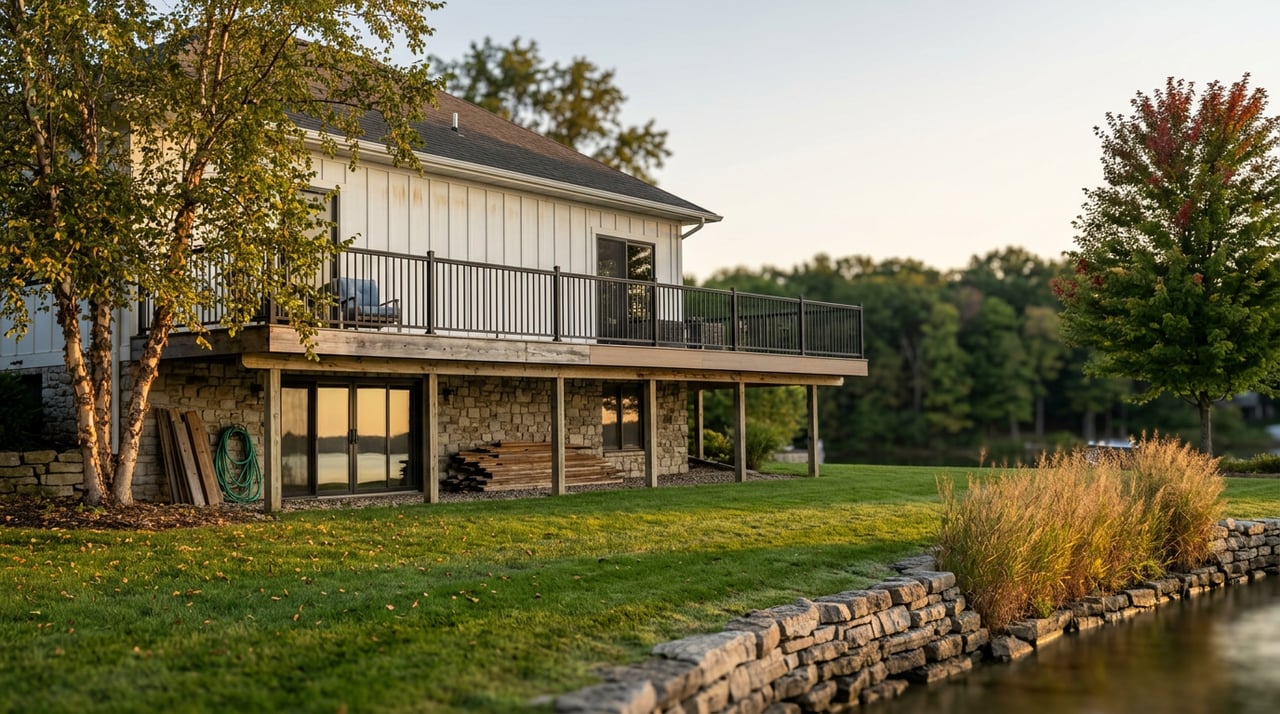
Prior Lake's shoreline is not a single era of construction. A local guide to lake life on Prior Lake describes the shore as a mix of "older cabin-era homes and long-established lakeshore streets, plus major remodels and newer rebuilds." That description matters more than it sounds. A home that started as a modest cabin footprint in the 1970s, gained a garage in the 1990s, a paver patio in the 2010s, and a pool deck more recently has usually never had all of that hard surface added up in one place. Each addition may have cleared its own permit. The cumulative percentage often has not been recalculated since.
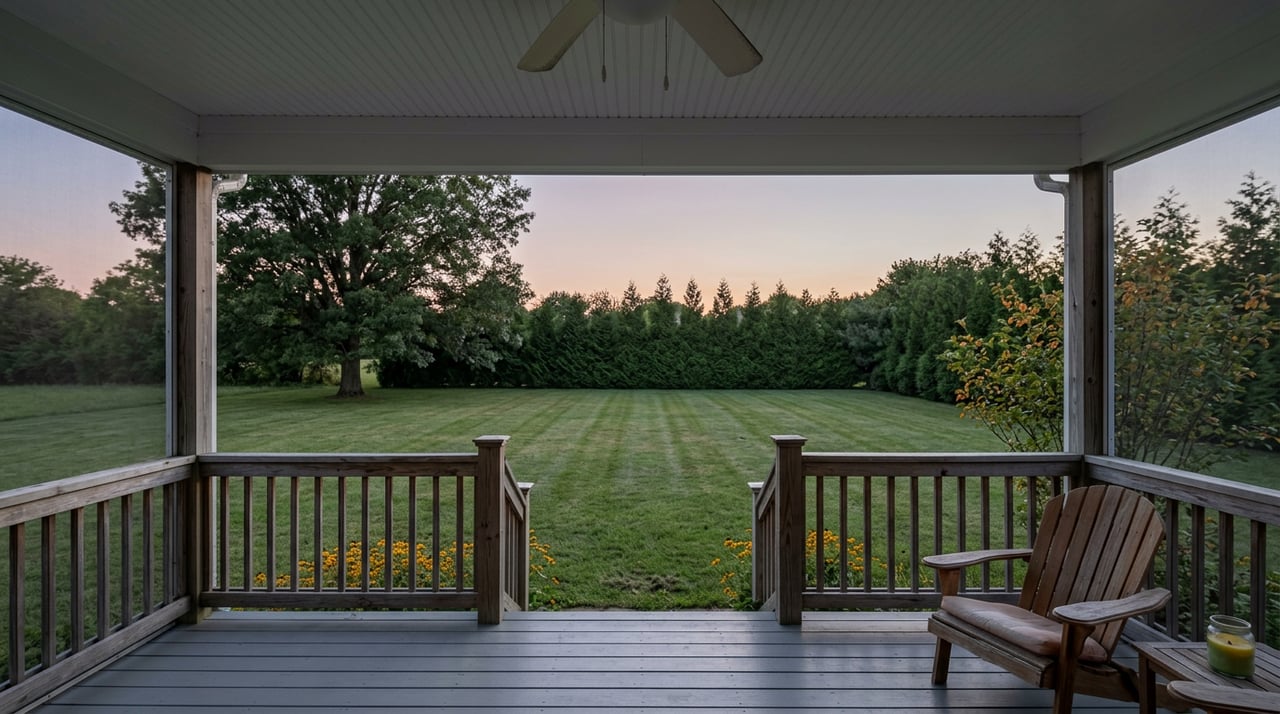
This is exactly where a deck addition can trip an unsuspecting owner. Minnesota's nonconforming structure standard allows limited deck additions on lots that already miss current setbacks, but only within a tight window. Under the state's own shoreland guidance, "deck additions may only encroach up to 30 feet toward the shore or 15 percent of the structure setback, whichever is more restrictive." A seller who assumes a decades-old deck is simply an asset may be selling a structure that already used up the only expansion room the ordinance allows.
What a Buyer's Engineer Finds That a Walk-Through Doesn't
A buyer touring the home sees a beautiful lot. A buyer's engineer or appraiser, working from a current survey, sees a percentage. If that percentage lands at or above 25, the lot's classification shifts from an asset with room to grow into a nonconforming parcel with a hard ceiling on future changes. That distinction rarely comes up during a showing. It comes up during inspection, after an offer is already in hand, which is precisely when it carries the most leverage for a buyer looking to renegotiate price or ask for repairs framed as compliance issues.
A seller who has already run the calculation, and can hand over a current site plan with the impervious percentage marked in the corner, removes that leverage before it exists. It signals a well-prepared listing rather than one hoping the topic never comes up.
The Dock Clock That Didn't Exist Last Year
Impervious surface is a land question. Docks raise a separate, newly sharpened one. As of the DNR's June 23, 2026 guidance, state law requires docks and lifts to remain out of the water for at least 21 days before being placed into a different waterbody, and anyone transporting a dock or lift with attached zebra mussels needs a free permit to move it legally. In reporting on that same announcement dated June 25, 2026, the DNR's April Rust put a number on the risk: roughly 5 percent of Minnesota's lakes and rivers currently carry zebra mussels, though a University of Minnesota study suggests the spread is slowing. Prior Lake's own shoreline is already documented as carrying zebra mussels and Eurasian watermilfoil, according to a local lake resource guide that tracks the lake's condition.
None of that lowers a property's value. It does mean the 21-day window has to be built into a closing timeline the moment a dock or lift is changing hands, especially if a seller plans to take equipment to a different lake, or a buyer plans to bring equipment from elsewhere onto Prior Lake. A closing date set without that math in mind can force an awkward choice between delaying the transfer or leaving equipment behind.
Two Offices Sign Off on the Same Shoreline
Anything touching the shore in Prior Lake answers to more than one authority. The City of Prior Lake runs its own lakeshore preservation program, which directs homeowners to the DNR for construction permits and flags grant opportunities available through the watershed district for natural shoreland restoration. Separately, the Prior Lake-Spring Lake Watershed District enforces its own permitting rules, adopted May 10, 2022 and effective that June 1, covering land-disturbing activity within the district on top of whatever the city and DNR already require.
A single project, a retaining wall near the shore or a drainage change on a sloped lakeshore lot, can end up needing sign-off from both offices rather than one. Knowing which office to call before a buyer's agent asks is the difference between a confident answer and a delay that lands during the inspection period.
Before You List, in This Order
- Pull or commission a current survey with the impervious surface percentage calculated, not estimated
- If the number is near or above 25 percent, get the lot's status confirmed in writing by Prior Lake planning before marketing any deck, patio, or garage as expandable
- If a watershed district shoreline restoration grant is in progress, document exactly what stage it is at
- If a dock or lift is moving to a different waterbody as part of the sale, count backward from the closing date and build in the 21-day dry period
- Gather any aquatic plant management or treatment records for the property, since a buyer asking about them is being informed, not difficult
A Few Straight Answers
Does exceeding 25 percent impervious surface disqualify a sale? No. It reclassifies the lot as nonconforming, which limits future expansion but does not prevent a sale or require anything be removed.
Do I need a permit just to take my own dock out for the season? No. The permit and 21-day rule apply specifically to moving a dock or lift into a different waterbody, and to transporting equipment with zebra mussels attached for decontamination.
Is a pre-listing survey worth the cost on a lake lot? On any parcel where impervious surface or setbacks might come up, a current survey is a small cost against the price a buyer may otherwise negotiate for once their own engineer runs the numbers.
Selling waterfront on Prior Lake rewards the same thing it always has: knowing the property better than the buyer's team does before they show up with a tape measure. If you are weighing a lakeshore listing and want a clear read on where your lot stands before it goes live, Shara Schmidt can walk through the specifics with you. Let's Connect.